View All
Bozeman Real Estate Market
Development
Bozeman Business
Bozeman Neighborhoods
Get Outside
Moving to Bozeman
Retiring in Bozeman
Just for Fun
The Selling Side
The Buying Side
Bozeman Nonprofits
Affordable Housing
Community Events
Living in Bozeman
Belgrade Real Estate
Livingston Real Estate
Manhattan Real Estate
Three Forks Montana Real Estate
Big Sky Real Estate
Moving to Montana
Home Ownership
Living in Montana
Bozeman Real Estate Group
Belgrade, MT
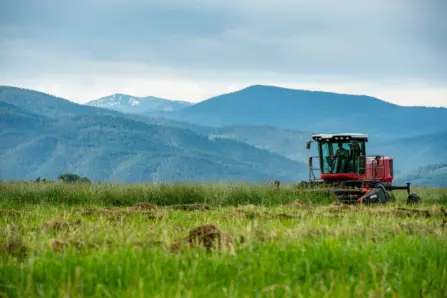
(Photo Credit: MSU Photo by Kelly Gorham)
Summary: The MSU BART Farm (Bozeman Agricultural Research and Teaching Farm) is a 474-acre working facility at 2730 West Garfield Street, operated by Montana State University as part of the Montana Agricultural Experiment Station system. It supports livestock research, student hands-on education, and horticulture programs, and remains one of the last large working farms within Bozeman's immediate footprint.
Five minutes west of MSU's main campus, off West Garfield Street, sits one of the most important, least talked-about pieces of land in the Gallatin Valley. The BART Farm is a 474-acre working agricultural research and teaching facility that has quietly supported Montana ranchers, farmers, and students for decades — and it's worth knowing about.
What is the MSU BART Farm in Bozeman?
BART stands for Bozeman Agricultural Research and Teaching Farm. Located at 2730 West Garfield, the farm is operated by Montana State University as part of the Montana Agricultural Experiment Station (MAES) system and was formerly known as the Towne Farm. It spans 474 acres of working land dedicated to livestock operations, agricultural research, horticulture programs, and hands-on student education.
The farm includes the Oscar Thomas Nutrition Center, the Miller Stock Pavilion, the MSU Farrier School, a Horticulture Farm, a research feedlot, a feed mill, and an artificial insemination building, with surrounding hayfields and pastureland. Beef cattle, sheep, and horses are all part of the operation.
What kind of research happens at the MSU BART Farm?
The research here is built to produce solutions that ranchers and farmers across Montana can actually use on working land, not just publish in academic journals. Projects focus on cattle nutrition, genetics, grazing systems, forage production, soil health, and livestock efficiency, all areas where Montana producers face real, ongoing pressure.
Montana agriculture operates under conditions most of the country doesn't deal with: short growing seasons, drought, unpredictable weather, and markets that shift faster than a rancher can plan around. Per MSU's MAES program, the farm also supports research in crop varieties, weed and pest control, and precision agriculture, with results that reach well beyond Montana's borders.
How does the BART Farm support MSU students?
MSU's animal and range sciences program has built its reputation on applied, hands-on learning, and the BART Farm is central to that. Students work directly with cattle, learn to breed livestock, and take part in field courses covering crop identification, soils, and culinary marketing at the adjacent Horticulture Farm.
The Horticulture Farm covers about 8 cultivated acres, including ten high tunnels for vegetable production and the Towne's Harvest Garden, a student-run CSA program. According to Dr. Tim DelCurto, MSU's department head for animal and range sciences, that hands-on component is what sets the program apart from peer universities in the West, and the animal science department has been growing, with MSU anticipating record freshman enrollment in recent years.
Why does the BART Farm matter to the Gallatin Valley?
As Bozeman has grown into a tech hub and outdoor recreation destination, agricultural land near town has become increasingly rare. The BART Farm is one of the last large working farms within the city's immediate footprint, and it's a visible reminder that the Gallatin Valley's identity was built on ranching and farming long before the subdivisions and tech campuses arrived.
The farm's presence also carries real implications for land use and open space in a valley where development pressure is constant. For anyone tracking how Bozeman grows and what gets preserved, the BART Farm is part of that conversation.
Want more local info?