View All
Bozeman Real Estate Market
Development
Bozeman Business
Bozeman Neighborhoods
Get Outside
Moving to Bozeman
Retiring in Bozeman
Just for Fun
The Selling Side
The Buying Side
Bozeman Nonprofits
Affordable Housing
Community Events
Living in Bozeman
Belgrade Real Estate
Livingston Real Estate
Manhattan Real Estate
Three Forks Montana Real Estate
Big Sky Real Estate
Moving to Montana
Home Ownership
Living in Montana
Bozeman Real Estate Group
Montana’s Population Growth Expected to Hit a 25-Year Low — What That Means for the Housing Market
On Jan 15, 2026
According to projections cited by the Bozeman Daily Chronicle and data from the Montana Bureau of Business and Economic Research, 2025 could mark Montana’s slowest year of population growth in nearly 25 years.
That’s a striking shift when you consider where the state was just a few years ago. In 2021, Montana was tied with Utah as the second-fastest-growing state in the nation, posting a population growth rate of 1.7%. Today, economists estimate Montana’s growth rate will land between 0.3% and 0.4% in 2025, down from 0.52% in 2024.
Has Montana’s popularity faded or is the state simply settling into a more sustainable pace after an unprecedented surge?
The reality is that the pandemic pulled years of future migration forward. And once that artificial boost faded, affordability constraints, higher interest rates, and demographic realities brought growth back down to earth.
Montana Isn’t Shrinking
While the slowdown is significant, and surprising given Montana’s continued appeal, people are not leaving Montana in droves.
Montana’s population is still growing, just at a much slower rate. What’s changed is the volume and speed of new arrivals, not the long-term desirability of living here. The pandemic years pulled an unusually large number of moves forward, compressing what might have been a decade of growth into just a few years.
After years of rapid, sometimes chaotic growth, the state is finally taking a breath. So why has population growth slowed to its lowest point in roughly 25 years?
The Forces Behind the Slowdown
Housing Affordability (the biggest driver)
Between 2019 and 2022, median home prices in Gallatin County jumped from $398,000 to $699,000—an increase of roughly 76% in just three years.
While the market has cooled since then, prices haven’t meaningfully reversed. The cost of living, especially housing, remains elevated compared to pre-pandemic levels, and once mortgage rates rose rapidly in 2022, buyers lost the benefit of historically low interest rates to offset those prices.
➡️ Migration slowed because math stopped working.
The Remote Work Pullback
Remote work was one of the biggest accelerants of Montana’s pandemic-era growth.
As offices closed and work became location independent, thousands of people relocated to Montana to pursue a lifestyle their metropolitan-based jobs had never allowed before.
At the height of the pandemic, estimates suggest nearly half of the workforce was working remotely. Since then, that share has declined sharply. By early 2025, fully remote work had fallen to roughly one-quarter of the workforce, as employers increasingly pushed for hybrid or in-office schedules.
As geographic flexibility narrowed, fewer workers could relocate freely, and some were forced to move back closer to job centers.
➡️ States like Montana, which benefited heavily from location-independent work, felt this pullback more acutely.
A Broader Slowdown in Mobility
This shift isn’t unique to Montana. Across the country, Americans are moving less than they did in previous decades with national mobility rates now near historic lows.
Several factors are contributing:
- Higher mortgage rates make moving more expensive
- Dual-income households are harder to relocate
- Job changes no longer trigger moves as often as they once did
What This Means for the Housing Market
The real estate market today looks very different from what it did just a few years ago.
Here in Bozeman, demand has cooled at the same time housing supply has expanded, particularly through multifamily construction over the last five years. That combination has pushed inventory significantly higher.
By the end of 2025, Gallatin County had 1,060 unsold listings, a level we haven’t seen since 2011.
Despite this increase in inventory, median home prices have remained relatively steady. What has changed is market behavior:
- Homes are taking longer to sell
- Unsold inventory is building
- Price reductions are becoming more common
Follow us on Instagram or sign up for our newsletter to receive updates on market statistics.
What This Means for Buyers
For buyers, the tides are shifting in your favor. Competition is significantly lower than it was during the pandemic years. Buyers have more time, more options, and more leverage than they’ve had in quite a while.
See what's on the market now 🏠
What This Means for Sellers
Buyers are still out there, and it is not a bad time to sell a home. But, overpricing your home carries real consequences in a slower-growth market. Data-driven pricing beats “testing the market”. The homes that sell are the ones that are priced right from day one.
Pricing strategy matters more than ever.
The Bottom Line
State economists note that Montana’s population growth is likely to remain slow until housing prices and incomes become more balanced, a process that could take years as housing supply continues to catch up with the pandemic-era surge.
After years of rapid change, this period of slower growth may be exactly what allows Montana’s housing market to reset, becoming healthier, more balanced, and more sustainable for the people who already call this place home.
📬 Want More Information Like This?
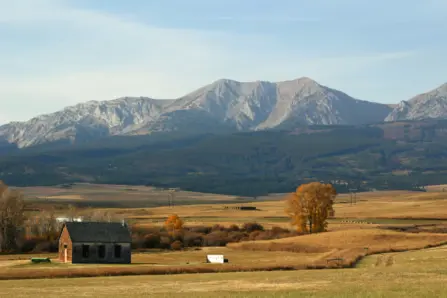
Photo Credit: Dan Engellant
FAQ's About Montana's Population Decrease
No. Montana's population is still growing, it's just growing much more slowly than it was during the pandemic years. The state went from a 1.7% growth rate in 2021 to a projected 0.3-0.4% in 2025. That's slower growth, not a decline.
Three main factors:
(1) Housing affordability, Gallatin County median home prices jumped 76% between 2019 and 2022,
(2) Remote work declined from nearly 50% at its peak to about 25% by early 2025, forcing some people back to job centers.
(3) Americans overall are moving less due to higher mortgage rates and other economic factors.
Median home prices have remained relatively steady despite slower growth. What's changed is market behavior. Homes are taking longer to sell, inventory is building, and price reductions are becoming more common. This suggests a rebalancing rather than a dramatic price crash.
By the end of 2025, Gallatin County had 1,060 unsold listings—a level not seen since 2011. This is a significant increase from the ultra-low inventory of the pandemic years, when buyers faced intense competition.
For buyers, conditions have improved significantly. Competition is lower, you have more time to make decisions, more options to choose from, and more room to negotiate than you've had in years.
No, it's not a bad time to sell, but strategy matters more now. Buyers are still active, but overpricing carries real consequences in a slower market. Homes that are priced correctly from day one, well-prepared, and professionally marketed are still selling.
The slowdown began in 2022, but became dramatic in 2023. Growth dropped from 1.5% in 2022 to 0.9% in 2023, then to 0.52% in 2024. The 2025 projection of 0.3-0.4% would mark the slowest growth in 25 years.
The COVID-19 pandemic was the primary catalyst. Remote work became widespread, allowing people to relocate while keeping their jobs. Montana offered outdoor recreation, space, and lifestyle appeal that became highly desirable when offices closed. The pandemic essentially pulled forward years of future migration all at once.
More Posts